Over the past trading week, US spot Bitcoin and Ethereum ETFs recorded total net inflows of more than $2.6 billion, the highest level since October 2025. The figure is all the more notable given that just one week earlier, the two fund groups experienced net outflows of roughly $392 million, marking a flow reversal of nearly $3 billion in a single week.
Breakdown by group:
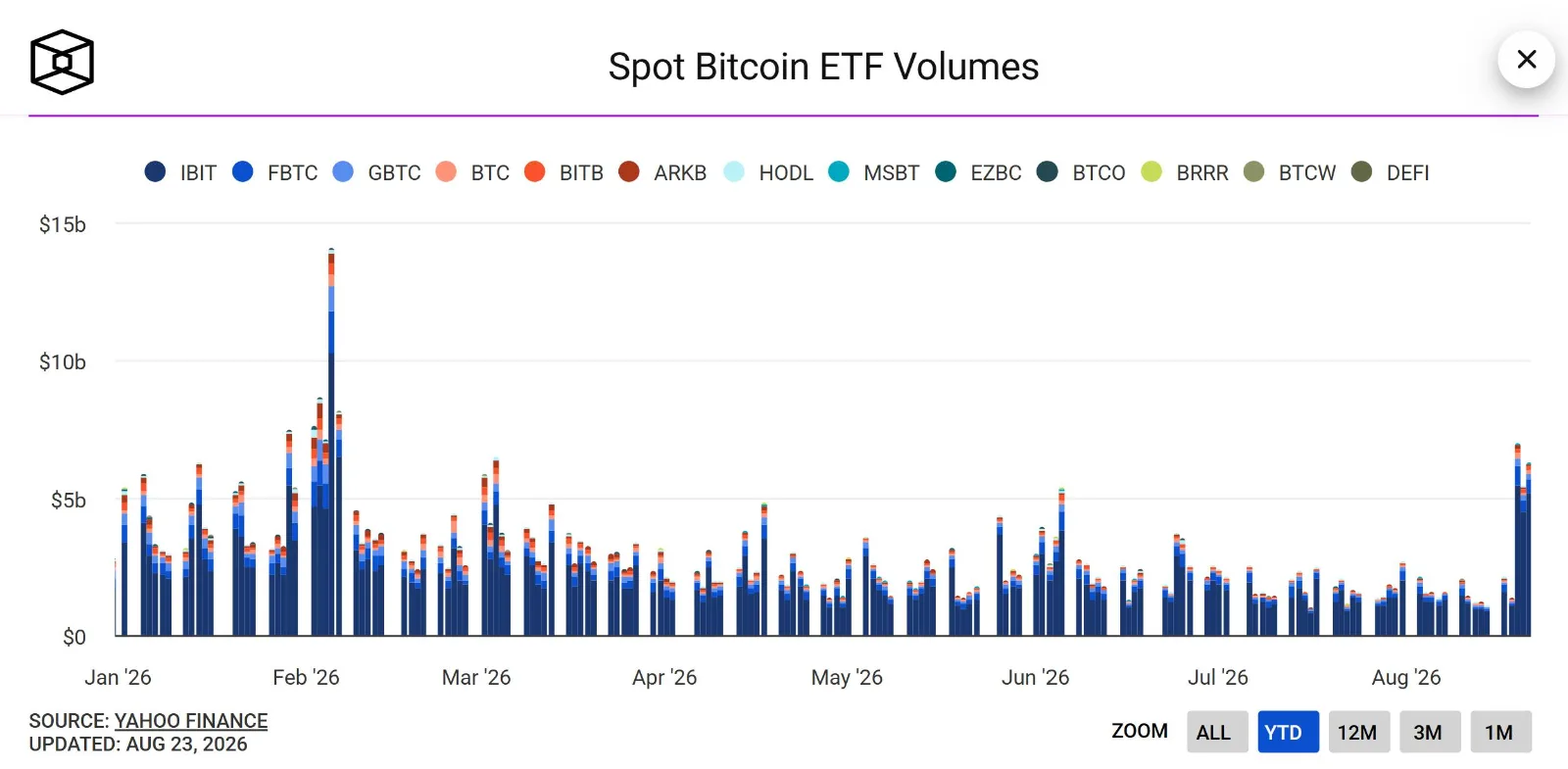
Bitcoin ETFs: net buying of ~$1.9 billion, the highest since the week ending October 10, 2025. Total trading volume for the group rose from 6.9 to $22.1 billion (up over 219%), while AUM climbed 25.4% to $96.1 billion. BlackRock’s IBIT alone brought in $239.3 million in the August 21 session, accounting for over 83% of the entire day’s inflows; across 4 consecutive sessions, IBIT captured $1.09 billion of the group’s total $1.61 billion.
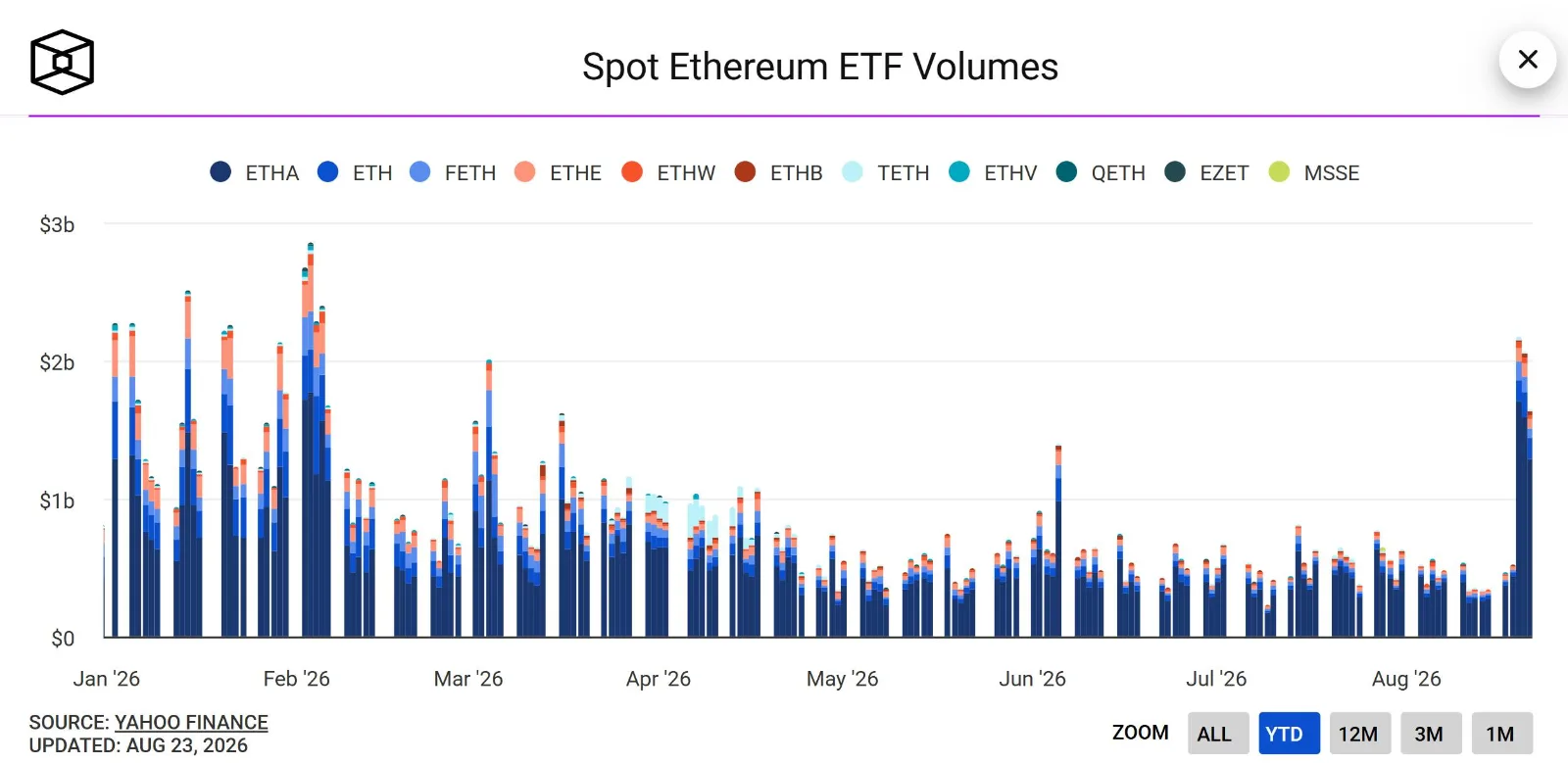
Ethereum ETFs: net buying of $697.2 million, their best week since October 2025, compared with net outflows of $2.3 million the previous week. Volume rose ~259% to $6.9 billion, and AUM grew 35.9% to $14.3 billion. For the first time since launch, the ETH ETF group’s AUM exceeded the total capital ever invested by participants, standing approximately $2.1 billion higher due to the price effect.
The backdrop fueling these inflows included a dense cluster of US policy signals during the week: pro-crypto remarks at a White House event, calls to pass the CLARITY bill, and the Treasury Department’s announcement that it would double its long-term bond buyback program. Prices reacted accordingly: BTC briefly topped $79,000 with a weekly gain of over 22%, its strongest in nearly two years; ETH climbed back above $2,400 after months below $2,000.
Why this figure matters more than it might seem: the current rally was triggered by the liquidation of short positions, meaning that internal momentum will inevitably taper off over time. Analysts cited by CoinDesk this week were blunt that a sustainable trend requires institutional spot demand to step in and take the place of shorts. The $2.6 billion in ETF inflows is the first sign of that transition underway, even if it represents just a single week of data.