Thailand has issued the “Travel Rule for Digital Assets” regulation for digital assets, requiring operators to also verify self-custodial wallets in transfer transactions.
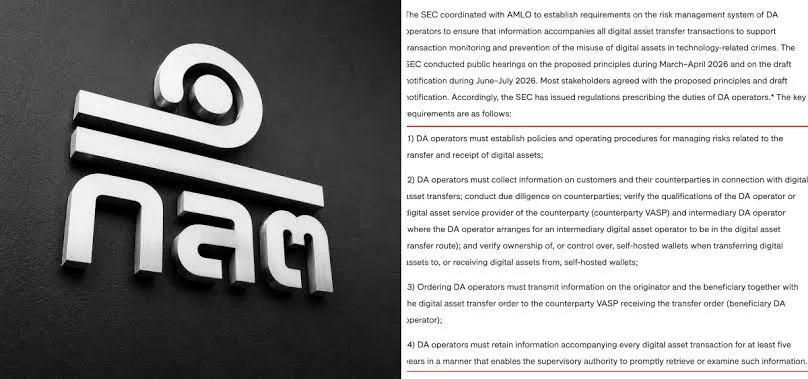
According to an announcement by the Securities and Exchange Commission of Thailand (SEC), the rule requires digital asset operators to collect information on customers and counterparties, conduct due diligence, and verify the ownership or control of self-custodial wallets involved in transfer transactions.
Roadmap and sanctions
The regulation takes effect on February 27, 2027, giving businesses more than 5 months to prepare. Operators must store transaction records for at least 5 years and be ready to provide them to inspection authorities upon request.
Ms. Pornanong Budsaratragoon, Secretary-General of the Thai SEC, stated that the regulation aims to reduce the risk of digital asset operators being exploited for money laundering, terrorist financing, and technology-related crimes.
Why self-custodial wallets are notable
The Travel Rule is fundamentally a standard in traditional finance: financial institutions must share sender and recipient information when transferring funds. When applied to digital assets, the regulation typically only affects exchanges and intermediaries. The notable aspect of Thailand’s rule is that it directly targets self-custodial wallets—wallets where users hold their private keys and transact without any intermediary.
This requirement carries significant practical implications: if a self-custodial wallet user receives funds from a Thai exchange, that exchange must now verify that the user genuinely controls the wallet. Verifying self-custodial wallets is inherently complex because no institution holds identity information as with bank accounts. This is why the Travel Rule for crypto remains a subject of debate between regulators and advocates of asset self-sovereignty.
With the regulation taking effect in February 2027, it remains unclear how Thai exchanges will implement the verification technically and to what extent individual users will be affected. Specific operational details still await further guidance from regulators in the near future.