Anthropic on October 8, 2026, announced an update to its Claude usage policy, effective November 12. The company clarified limits on election interference, weapons software, surveillance, and prolonged model abuse, while easing certain restrictions that previously affected legitimate civic activities.
According to Anthropic, most of the changes are intended to explain existing rules. As Claude is assigned longer and more autonomous tasks, the policy needs to clearly describe how it applies in new situations.
Banning Voter Deception, Not All Political Activities
Anthropic consolidated rules previously scattered across sections on elections, fraud, privacy, and misinformation into a dedicated section on deceptive activities. The scope includes concealing who is behind a message, using fake accounts to amplify content, and building tools to run influence campaigns.
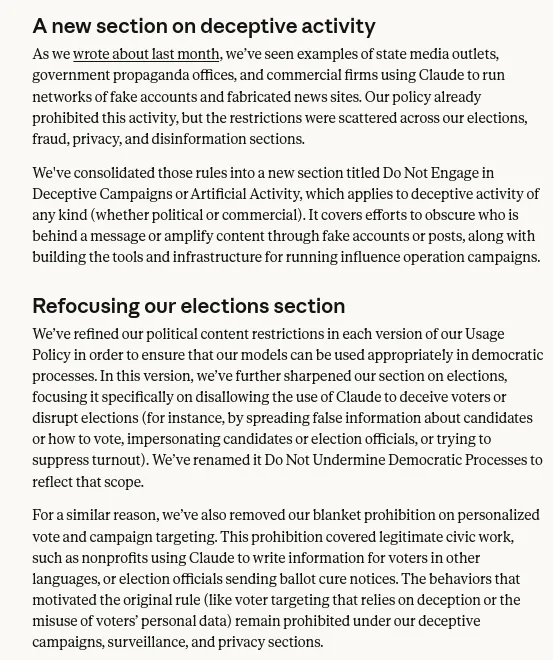
The elections section was renamed to focus on conduct that undermines democratic processes. Examples include providing false information about candidates or voting procedures, impersonating candidates or election officials, and attempting to deter voters from participating.
However, the company also lifted the blanket ban on personalized political targeting. Anthropic stated that the old policy had blocked even non-profit organizations from drafting voter guides in different languages. Activities grounded in deception or misuse of personal data remain prohibited.
Limits for AI with Agency
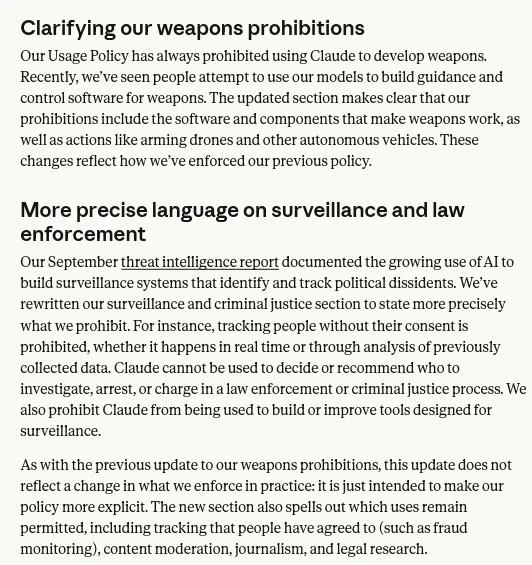
The weapons policy was clarified to include guidance, control software, and components that enable weapons to operate, rather than addressing only weapons manufacturing. The surveillance policy prohibits tracking individuals without their consent, including analyzing previously collected data.
In high-risk areas such as health, finance, and legal rights, Anthropic continues to require qualified professionals to review and modify Claude’s recommendations. Affected individuals must also be informed that AI was involved.
For hardware capable of acting autonomously and causing injury, operators must be able to observe the equipment and stop it when necessary. The equipment must also maintain a safe state if it loses connection with Claude.
Challenging Claude Remains Permitted
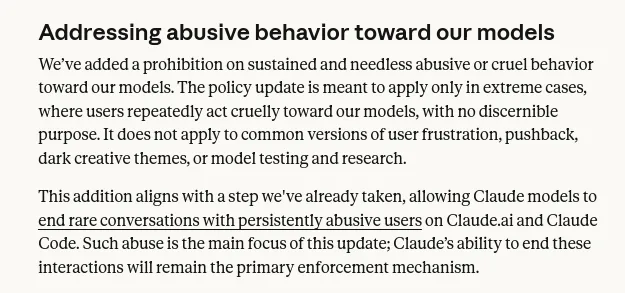
The policy against cruelty toward the model is aimed only at extreme, prolonged, and purposeless cases. The company stated that ordinary frustration, pushback, dark creative themes, testing, and research do not fall under this scope. The primary enforcement mechanism remains allowing Claude to end severely abusive conversations.
The update indicates that policy is keeping pace with the scope of AI actions, rather than merely controlling responses. What remains to be seen is how consistently these boundaries are enforced when the same agent can write content, use personal data, and control external tools.