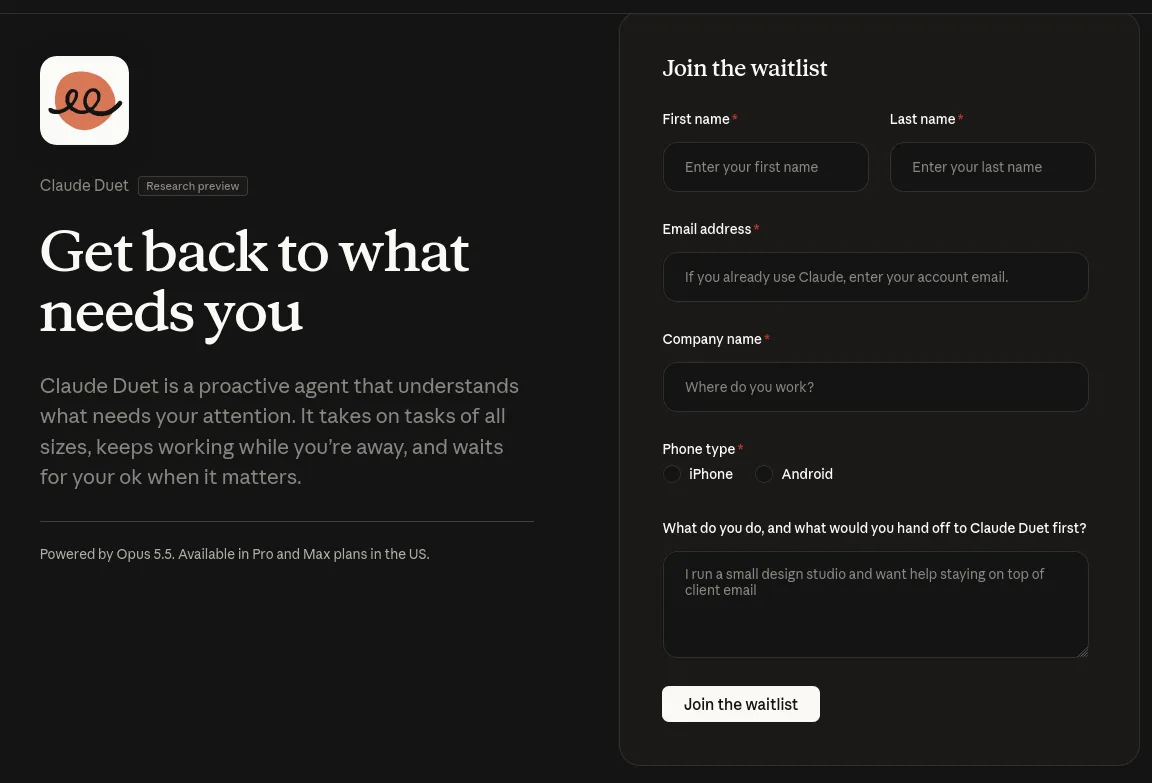
On October 21, 2026, research lab Anthropic officially introduced Claude Duet, a standalone AI agent application on iOS, Android, and web browsers. Unlike traditional chat interfaces that passively await prompts from human users, Claude Duet is designed to be an assistant that proactively reaches out to users, tracks workflows, and executes delegated tasks.
The product is powered by the company’s most capable model, Claude Opus 5.5, and is currently rolling out in a research preview via a waitlist exclusively for individual Pro and Max plan subscribers in the US market. Team and Enterprise business plans are not part of this initial rollout.
An agent running in the background on a personal cloud computer
The core differentiator of Claude Duet lies in its execution environment. Each agent session operates on an isolated cloud computer provisioned specifically for each user. Thanks to this architecture, the agent can continue reviewing data, generating spreadsheets, or completing complex computational tasks even after the user turns off their screen or closes the application.
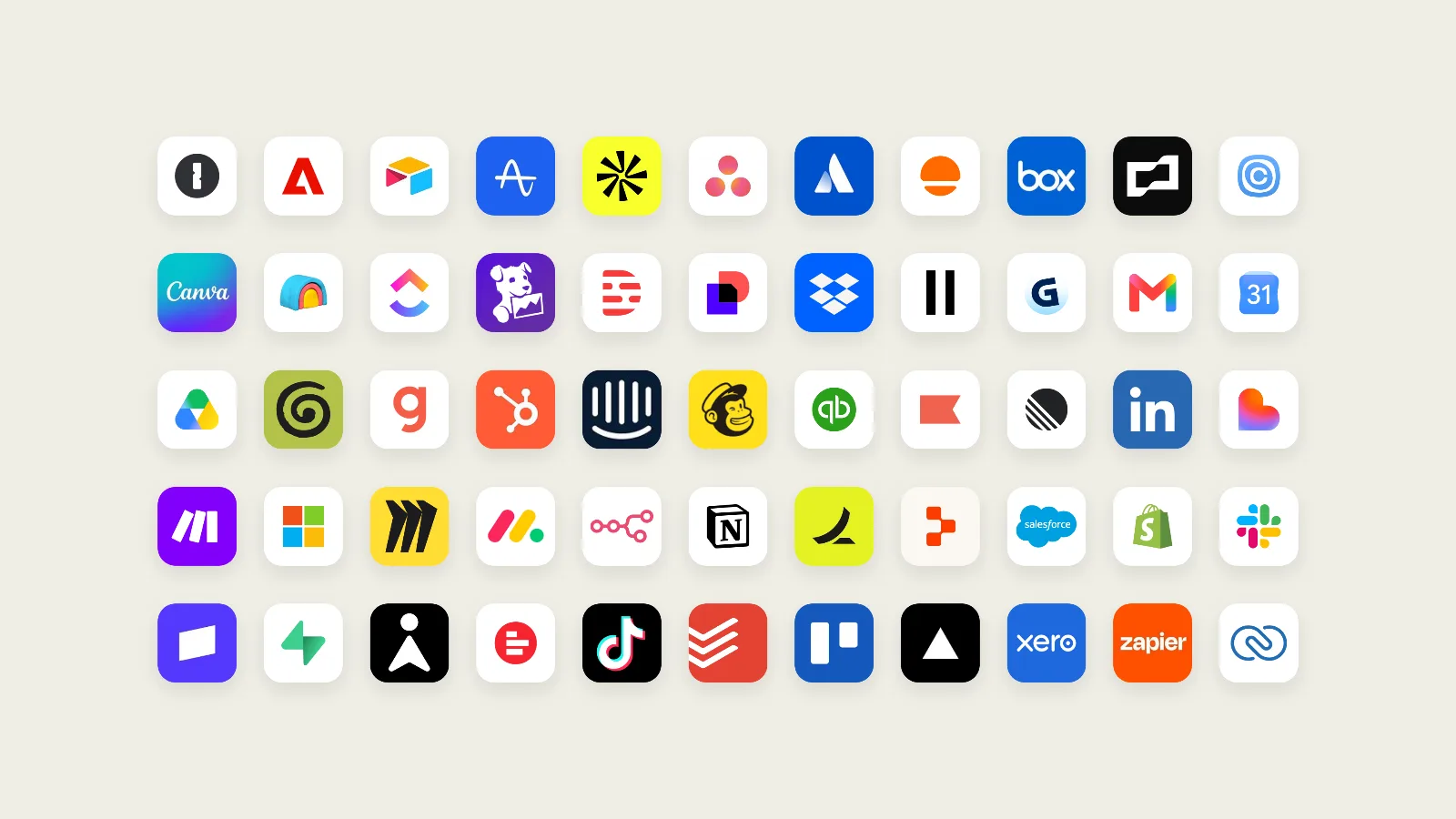
According to product documentation, Claude Duet supports connections to more than 6,000 integrations and extensions, including popular productivity tools such as Gmail, Google Calendar, Slack, Notion, Stripe, Shopify, QuickBooks, and Microsoft 365. Each morning, the agent can automatically send a morning brief, highlighting urgent emails requiring responses, flagging upcoming invoice due dates, or preparing business contracts for user review.
Despite its high degree of autonomy, Anthropic has applied a strict safety philosophy by establishing supervisory checkpoints. The agent is prohibited from autonomously making decisions on actions that carry legal or financial implications. Whenever an important message must be sent, an electronic document needs to be signed, or a payment transaction must be processed through gateways like Stripe or Shop Pay, the system is required to trigger a notification and await explicit user approval.
The challenge of the plan usage limit paradox
Alongside its convenience, tech observers quickly pointed out a practical hurdle: Claude Duet’s background activities are counted against the interaction limits of the Pro or Max plans. This means that if users delegate too many inbox-monitoring or background data aggregation tasks, their plan’s computational resource quota will deplete far more rapidly than under standard conversational usage habits.
Anthropic itself candidly noted that the product remains in an experimental phase and may occasionally misinterpret conversational context or misjudge the priority of urgent tasks.
The arrival of Claude Duet marks an important turning point for the tech industry, moving from passive language assistants toward a generation of autonomous action agents. As technical barriers gradually diminish, the next question will center on user trust: are we ready to hand over control of our daily work to a machine that proactively comes to us?