On October 13, 2026, Anthropic published a technical post explaining the development of Scion, an in-house version control system designed to completely replace Git for its internal monorepo. This move stemmed from Claude’s AI agents writing code at massive scale, pushing traditional software development tools originally designed for humans into a state of severe overload.
According to statistics from Anthropic, the number of code changes merged into the monorepo surged from around 2,500 per day in May 2026 to more than 30,000 per day in September 2026. This explosion of 12 times in just four months turned storage and continuous integration infrastructure into the company’s biggest bottleneck, rather than the coding speed of its engineers.
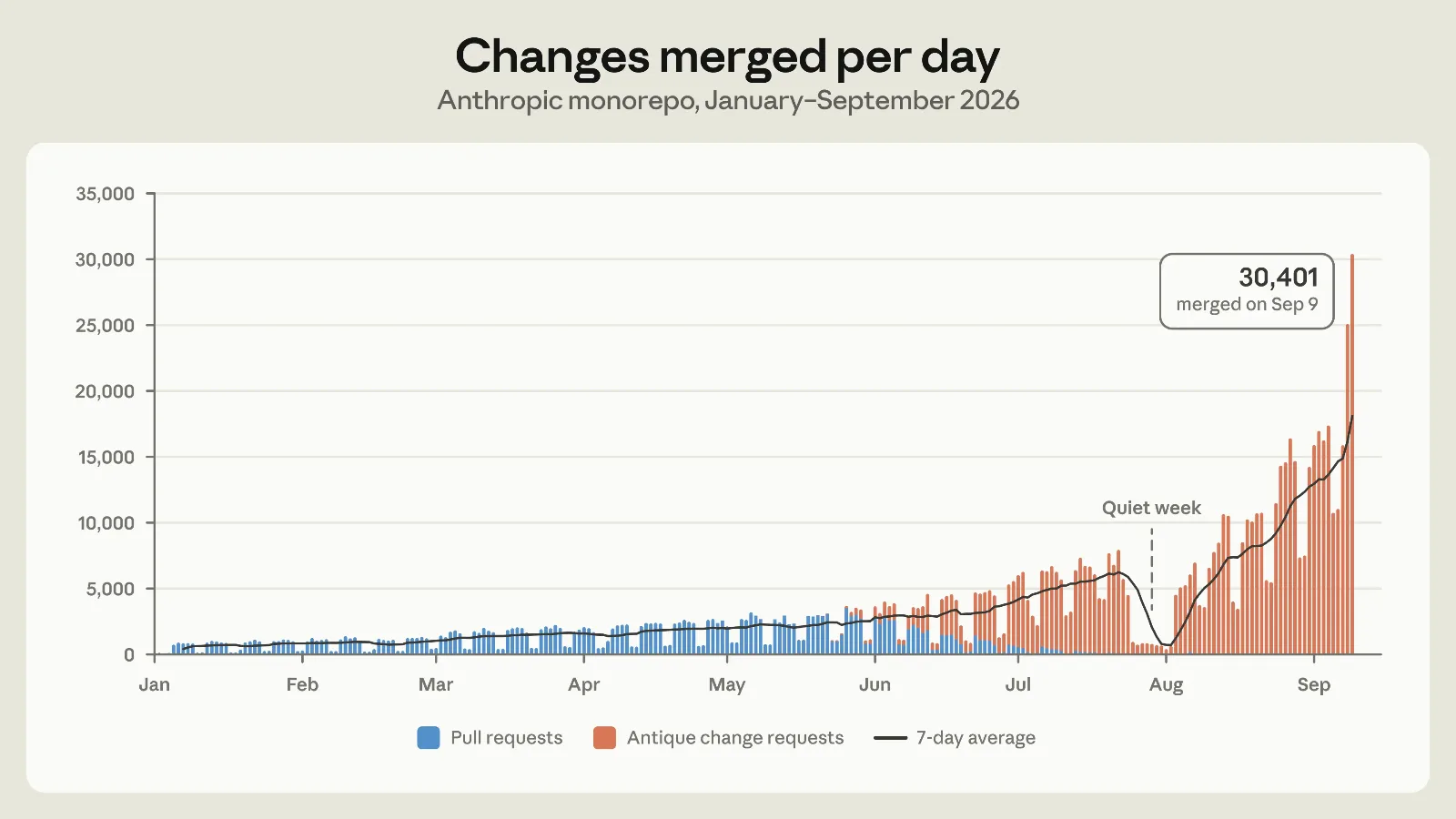
Infrastructure bottlenecks when AI agents directly generate code
The scale of Anthropic’s monorepo currently features a main branch history of nearly 100 GB, a compressed working copy exceeding 25 GB, and automated testing systems recording around 25 million code checkouts per day. If the company continued using Git’s native distributed cloning mechanism, internal data transfer traffic could surpass the 600 PB per day mark—a figure that would be unsustainable even when operating hundreds of secondary backup server clusters.
To address this challenge, a team of seven Anthropic engineers completed the development of Scion alongside a companion code review tool named Antique within five months. Notably, Claude models themselves directly participated in restructuring the system. A prime example is the data ingestion pipeline from Git to Scion, which, after being rewritten by Claude, reduced memory usage by 20 times and increased processing speed by 4 times.
Centralized architecture and the reality of open source
Scion’s core distinction lies in abandoning Git’s distributed, offline-first nature in favor of an always-online client-server model. All complex computations involving file history, branching, diffing, and generating commit logs are offloaded to distributed server clusters. Clients maintain only a limited local cache and download strictly the files that actually require editing, slashing hardware resource consumption by 200 times compared to the legacy infrastructure.
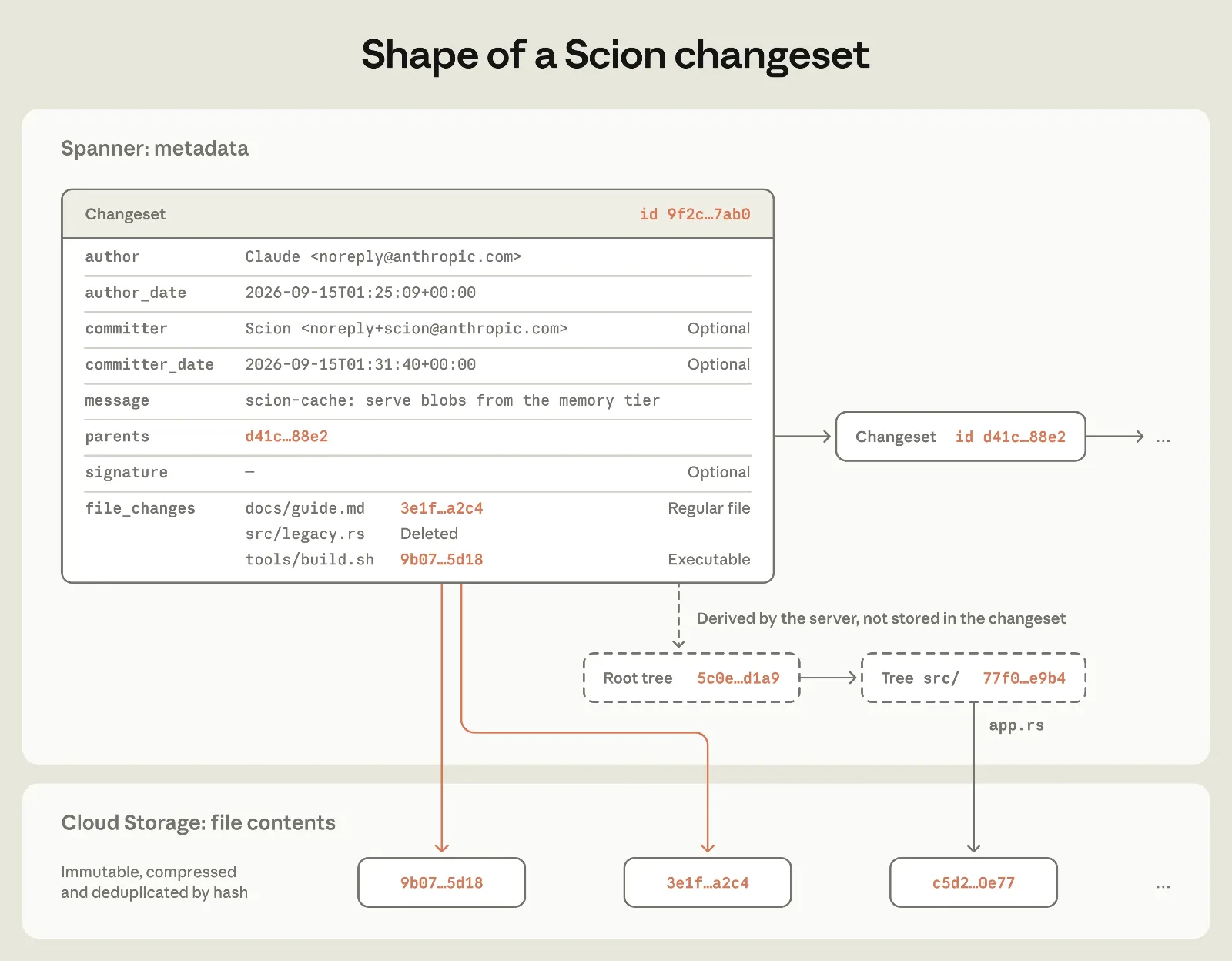
Contrary to misleading headlines on several news aggregators, Anthropic explicitly confirmed that it is not open-sourcing Scion to the public. The company emphasized that Scion is a bespoke design specifically tailored for an ultra-large monorepo driven by an automated agent network, making it entirely unsuitable for conventional development needs. Instead, Anthropic is proactively sharing its architectural principles with GitHub and GitLab to help the broader community improve server protocols for the age of automated programming.
The case of Scion raises a major question for the future of software engineering: as AI code generation capabilities outpace the capacity of traditional workflows, will open-source tooling ecosystems adapt in time to keep pace with this wave of end-to-end automation?