On August 26, Z.AI, the Chinese AI lab also known as Zhipu, confirmed to Bloomberg that Ox Alpha, the “stealth” model that had sparked widespread curiosity over the past week, is a new release in its GLM series and will have its weights publicly released overnight.
The story unfolded as follows: Ox Alpha appeared on OpenRouter and OpenCode on August 20, completely anonymous—with no logo, no designated provider, and only a brief description characterizing it as a “reasoning model for coding, long-running agentic work, and production workloads.” Offered for free during its preview phase, the model surged quickly to the top of OpenRouter’s usage leaderboard, registering more than twice the usage of DeepSeek. Stripe CEO Patrick Collison hailed it as “very impressive,” while the AI community spent the week dissecting it: some guessed GLM, others suspected Microsoft’s MAI model, and Reddit debated whether it was of Chinese origin.
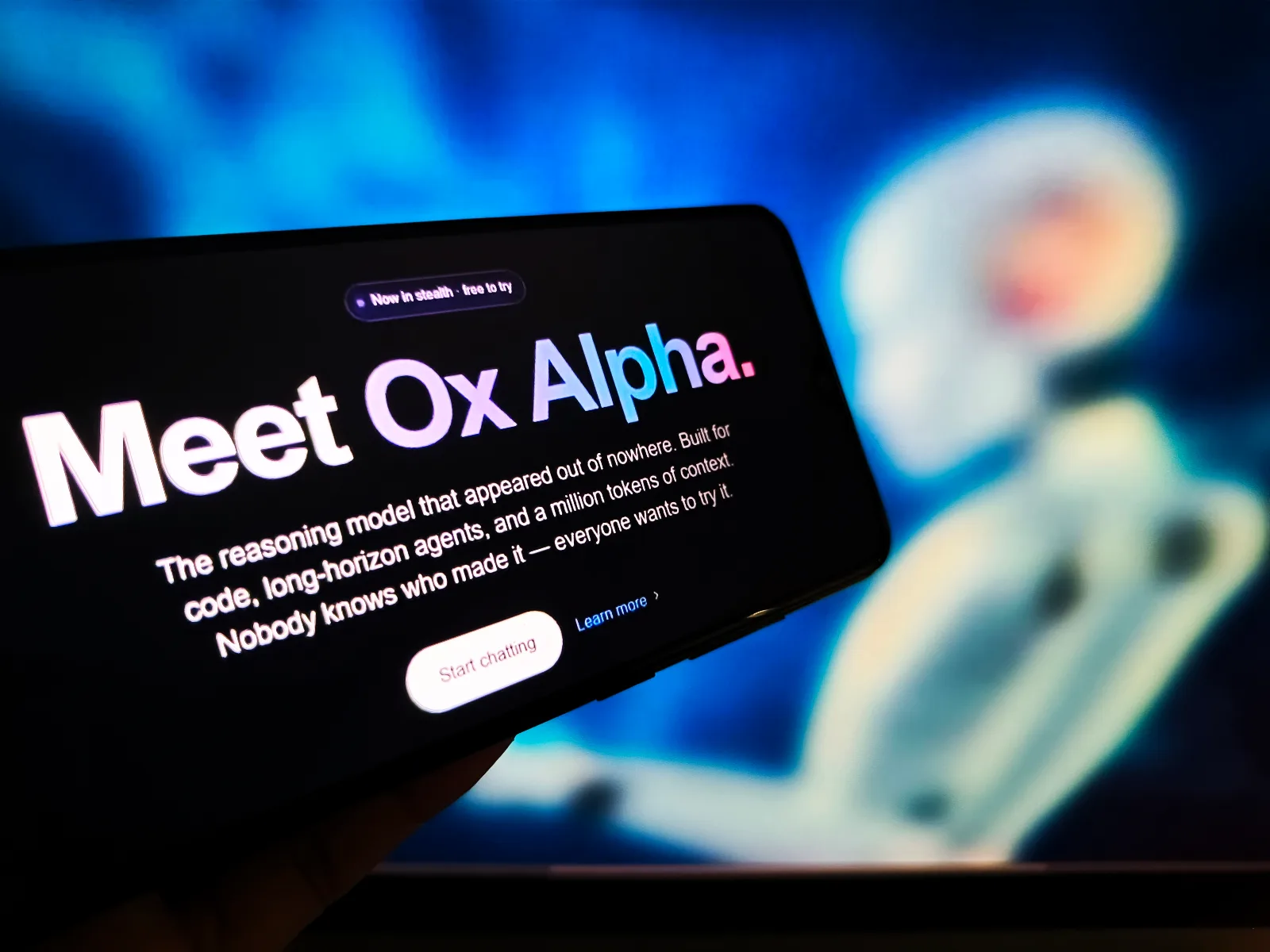
Technical specifications from OpenRouter explain why it drew users so rapidly: a native context window of 1,048,576 tokens (1M), multimodal support covering text, images, and video, and an architecture tailored for prolonged coding workflows and long-horizon autonomous agents. The developer community benchmarked its output syntax and tokenization behavior against GLM-5, uncovering distinct stylistic matches and deducing that this was an experimental checkpoint of GLM-5.3 or GLM-5.3-Flash prior to an official unveiling.
Confirming its identity places Z.AI in head-to-head competition with rival open models from DeepSeek, Moonshot AI, and Alibaba, but with a rare edge: the model had already proven its real-world appeal on usage leaderboards before its formal debut. Releasing open weights for such a sought-after model accelerates an accelerating industry trend: frontier-level capabilities migrating toward open deployment.
A detail even more thought-provoking than benchmark scores lies in the release strategy itself. Ox Alpha serves as a textbook example of a stealth rollout: a lab deploys an anonymous model to developer hubs to stress-test inference infrastructure, harvest telemetry data, and evaluate post-training optimizations prior to going public. For users, it offered a week of free access to a capable model; for the company, it functioned as a zero-marketing-cost global beta test. Both sides benefited, yet it leaves one question worth asking: with the creator’s identity hidden, how much of the past week’s glowing praise was driven by genuine quality, and how much by the intrigue of a mysterious name?