The software research and development community recently spotted the unexpected appearance of three new model identifiers within OpenAI’s API on October 18. The three recorded names include aurora-red-alpha, aurora-green-alpha, and aurora-blue-alpha, all featuring the aurora prefix alongside an alpha suffix indicating an early experimental stage.
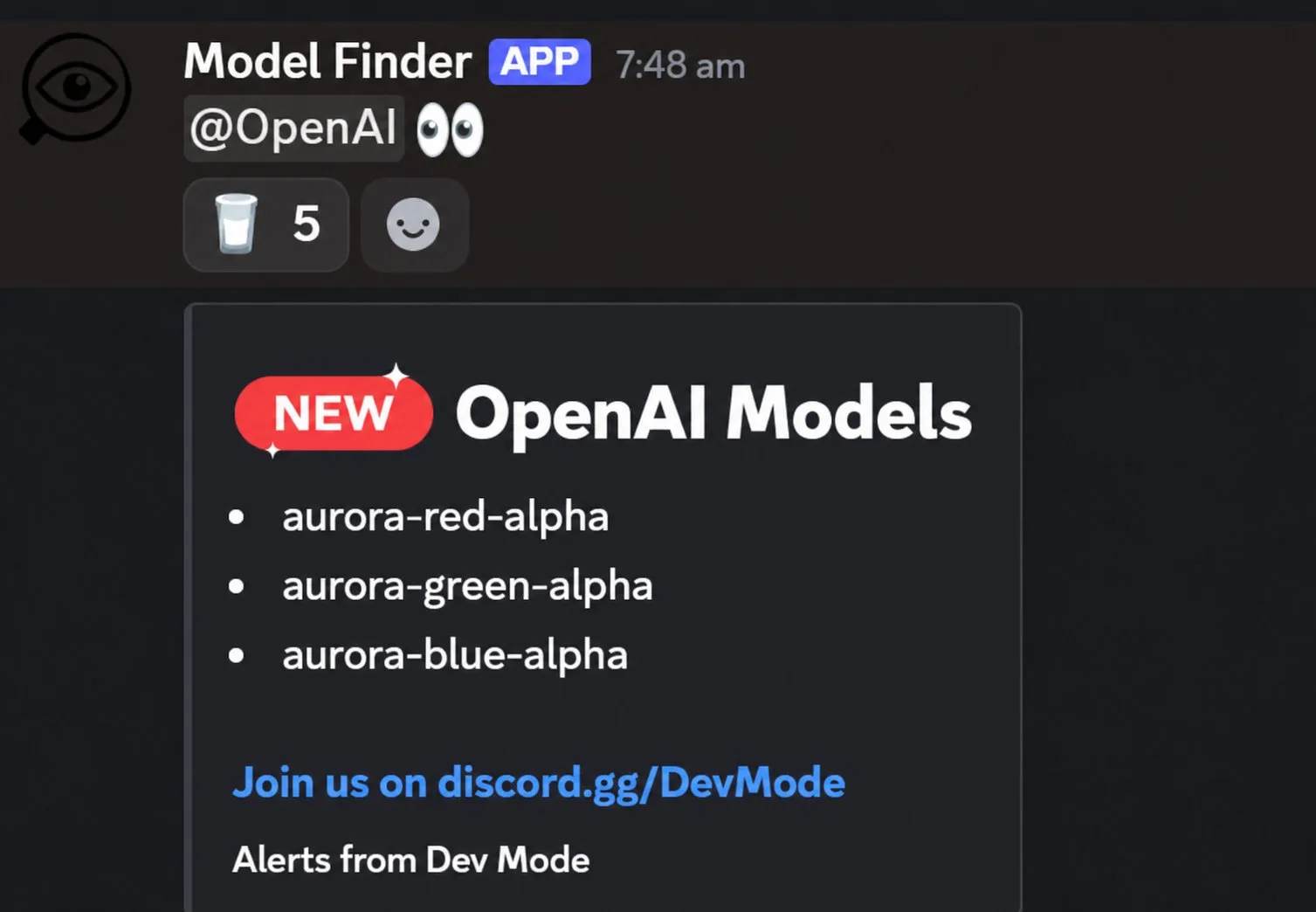
However, this appearance was short-lived before system administrators removed the entire list from the public interface. This pattern suggests it was most likely an accidental release during an internal technical update, or a backend configuration test ahead of an official launch.
Notably, when developers experimented with sending queries to these endpoints, the aurora-red-alpha version returned a 503 error code, signaling that the system was overloaded or temporarily unavailable. This response confirms that the identifiers were linked to active backend servers rather than serving merely as frontend UI placeholders.
Despite drawing significant attention across the tech sector, OpenAI has remained entirely silent regarding the incident. The company has not issued any press release, updated its changelog, or released technical documentation, pricing details, or specific use cases for any of the versions. Consequently, the true capabilities of the aurora family remain unknown.
The aurora moniker is not entirely unfamiliar to artificial intelligence observers. In February 2026, an identifier named aurora-alpha briefly surfaced on the OpenRouter routing platform. At the time, speculation linked the model closely to the GPT-5.3-Codex-Spark family tailored for advanced programming tasks. The division into three color variants—red, green, and blue—in this latest appearance has fueled hypotheses that OpenAI may be testing different optimization tiers for code generation or inference speed, or perhaps supporting its Daybreak cybersecurity initiative.
Even so, experts caution developers and enterprises against prematurely incorporating unannounced alpha model identifiers into actual production roadmaps. Without service-level agreements, stable pricing, or official guidance from the provider, relying on experimental builds carries a substantial risk of disruption. What observers must await are formal technical announcements from OpenAI in the period ahead to determine whether these represent a stepping stone toward a new generation of specialized models.