OpenClaw has just released OpenClaw 2.0, described by the team as the largest update in the project’s history. Built by 933 contributors, including 569 first-time contributors, the release includes more than 16,000 pull requests and accounts for roughly 50% of all pull requests ever merged into OpenClaw.
A key highlight of the update is simplifying the new user experience, particularly the installation process. On a first install, OpenClaw now takes advantage of what users already have on their machines—including existing ChatGPT or Claude subscriptions, API keys, and locally run models. A significant portion of configuration has been eliminated or moved out of the initial setup, helping users reach their first conversation much faster. The remaining configuration can be completed directly while chatting with Claw.
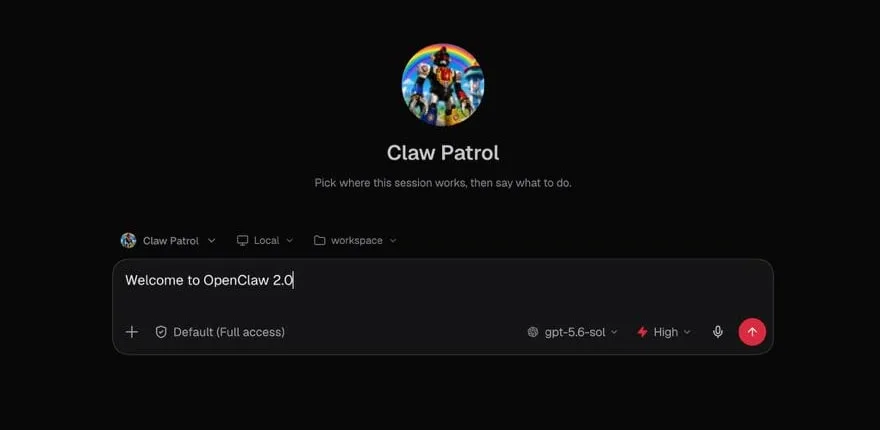
Browser app: Where most users first encounter OpenClaw, it has been rebuilt into a first-class experience. The app opens directly into a conversation with Claw, allowing users to pick up where they left off or follow along live when needed.
Why did the update take nearly two months? Previously, OpenClaw had released 106 versions in 230 days, mostly one or two days apart. Going nearly seven weeks without a new release was unusual for the project. The reason: the team grew rapidly, and the volume and pace of work outgrew both the existing platform and the release process, forcing them to overhaul both simultaneously. With a release containing half of all pull requests ever merged, the team prioritized ensuring it worked well for both newcomers starting from scratch and users upgrading from older versions, rather than shipping quickly and burdening users with breaking updates that disrupted existing configurations.
A notable new feature is shared cloud sessions, transforming OpenClaw into a multiplayer experience. Previously, there was no way to bring another team member into a task without losing what Claw already knew. This feature allows sharing tasks, collaborating in real time, or handing off work with full context intact—and the OpenClaw team itself used it to build OpenClaw.
The core of OpenClaw’s philosophy: the project is open source and owned by the user, not tied to a single company, model, or AI provider. A Claw can begin with a simple workflow, such as monitoring a child’s school email inbox and sending notifications via Telegram when something important comes up, and gradually expand into many other areas of life and work. For those interested in autonomous AI agents running on their own machines, this is a milestone worth watching in the evolution of open source in this space.