Apple has filed a new court submission in its lawsuit against OpenAI, unveiling “shocking evidence” from a preliminary forensic analysis of former engineer Chang Liu’s MacBook. This marks Apple’s latest move to urge the court to grant expedited discovery in the trade secret leak lawsuit.
The lawsuit began in July, when Apple accused former employees of stealing trade secrets to bring to OpenAI. Liu was a senior system electrical engineer at Apple who left the company for OpenAI in January. According to the complaint, he exploited a security vulnerability to download confidential technical files after his departure.
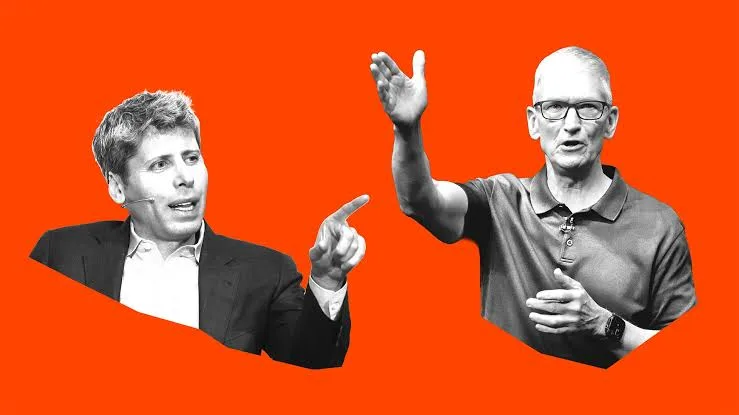
According to the new filing, Liu’s counsel handed over the MacBook he used after leaving Apple, and the initial analysis uncovered four key points:
-
Liu not only downloaded Apple’s confidential circuit schematics but also used them in his work at OpenAI, specifically running simulations using LTspice software in March;
-
The unauthorized access to Apple’s cloud storage was not concealed by Liu, but rather was well known to both him and others at OpenAI;
-
Upon learning that Apple had opened an internal investigation, Liu sent instructions to destroy evidence to a colleague at OpenAI, who confirmed they would do so;
-
Liu used a tool at OpenAI with a name identical to an internal Apple engineering application.
Apple argues that once trade secrets are fed into an AI model, the model’s learning “can result in irreversible, continuing uses and dissemination.” Apple also stated that Liu had used the circuit schematics on a Mac mini, after which the data was synced via iCloud to the MacBook, and the company is now seeking access to that Mac mini as well.
For its part, OpenAI previously urged the court to dismiss the lawsuit. Apple countered that this evidence proves the allegations are not a “fishing expedition,” but rather that trade secrets are actively being used and evidence is being destroyed.
This lawsuit is one of the biggest commercial confrontations between two AI giants, and the outcome could influence how AI companies hire talent from rivals, as well as the boundary between corporate mobility and taking trade secrets. The next crucial development to watch is how the court decides on Apple’s request for expedited discovery, and whether a preliminary injunction will be issued.