On October 8, Google Cloud introduced Gemini agent features at the Gemini at Work 2026 event, aiming for an AI agent capable of answering questions, handling knowledge work, generating content, and writing and running code within the same system. Notably, Google separated the agent from the underlying model while bringing it directly into the enterprise workspace.
According to the announcement, users can assign goals rather than describing each individual step. The agent connects with organizational tools, data, and rules to carry out the work.
Memory and Work That Doesn’t End When Closing the Laptop
Google said the Gemini agent runs in the cloud and maintains the same memory and context across devices and access channels. Tasks spanning multiple hours or days can resume when users close their computers.
The system can also spin up sub-agents for specific tasks and orchestrate them in parallel or sequential steps. Instead of requiring a single model for all tasks, Google said agents can choose between supported Gemini and Claude models, with plans to add other options later.
This separation has practical significance: an organization’s data, workflows, and memory can be preserved at the agent layer, even when the underlying processing model changes. However, the potential for cost reduction or increased accuracy from model selection still needs to be evaluated on a task-by-task basis.
Agents with Their Own Accounts and Identities
In Workspace, Gemini is integrated into Gmail, Drive, Docs, Slides, Sheets, Chat, and Calendar. Google described three ways to use it: as a personal assistant, suggesting tasks that can be delegated, and as an agent working as a team member.
With the final option, the agent has a dedicated Workspace account, including email, calendar, Drive, and a name in the company directory. Coworkers can add it to Chat groups or mention it in document comments. The agent acts under its own identity rather than borrowing the identity of the person delegating the task.
Google said this type of agent only sees content shared with the team, based on existing permissions and membership. That detail is more significant than merely assigning an email address to an AI: it helps distinguish who performed an action and what data the AI is allowed to access.
Deep Integration Also Requires Deep Control
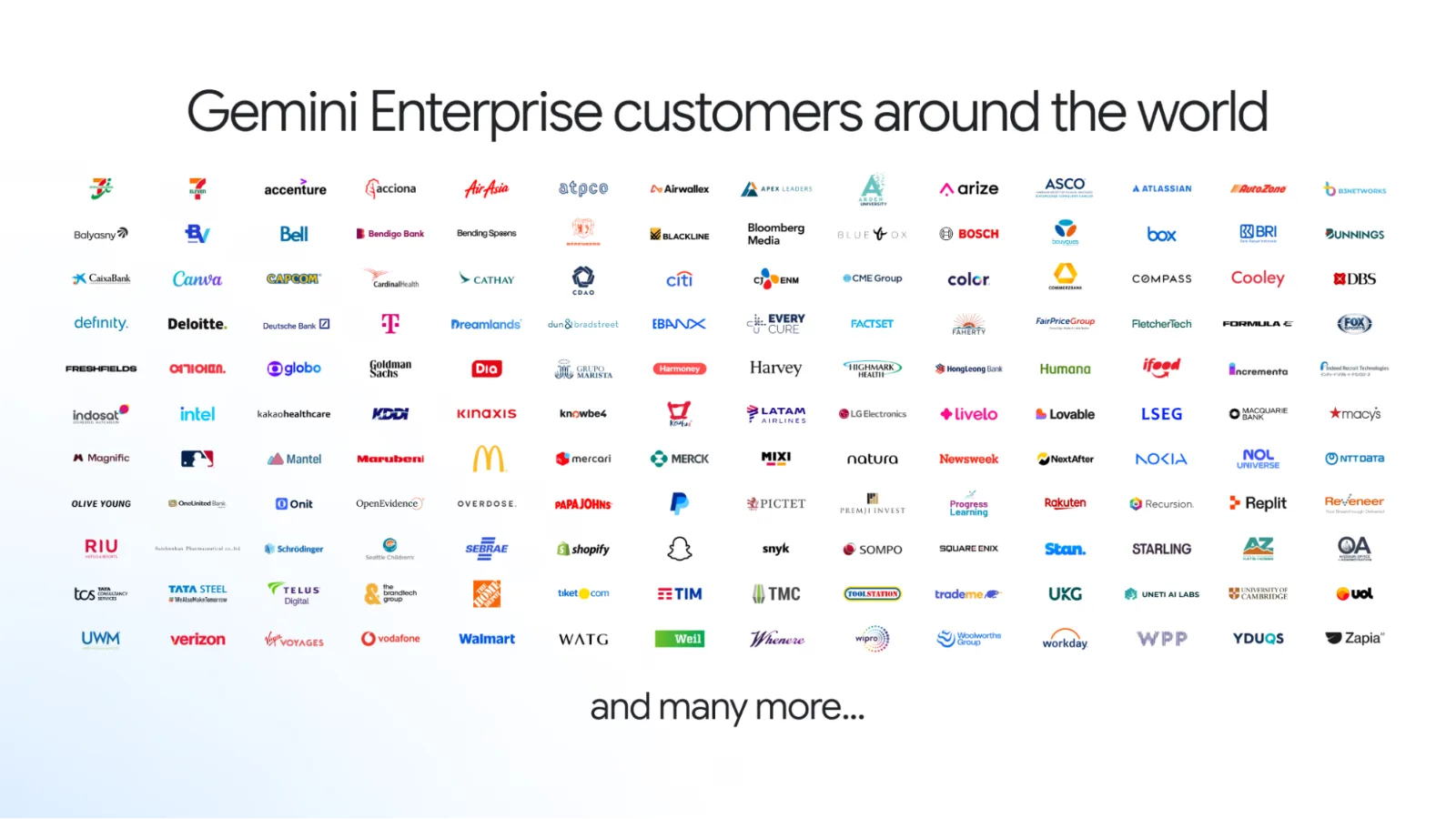
Google introduced mechanisms for identity management, access control, isolated execution environments, and spending controls. The company also announced that nearly 90% of Fortune 100 enterprises use Gemini Enterprise.
This direction shifts AI competition toward orchestrating work across multiple applications. What remains to be seen is whether enterprises can genuinely delegate responsibility to agents while maintaining clear control over access permissions, costs, and actions requiring human approval.