On October 13, the International Monetary Fund (IMF) issued a warning that a sharp decline in AI tech stock prices could send shockwaves through financial markets and threaten global economic stability. In its semi-annual Global Financial Stability Report, the IMF ranked a deep correction in AI stocks among the three most prominent near-term risks, alongside rising government borrowing costs and the threat of widespread cyberattacks.
The fund described the trio of risks as near-term catalysts that could trigger a sudden tightening of financial conditions, leading to turmoil in international capital markets.
Record concentration among Big Tech stocks
Speaking at the report’s launch, Athanasios Vamvakidis, deputy director of the IMF’s Monetary and Capital Markets Department, noted that global exposure to U.S. assets, particularly AI companies, is at an all-time high. While these capital flows are supporting economic growth through the wealth effect, any sudden reversal would bring far-reaching consequences.
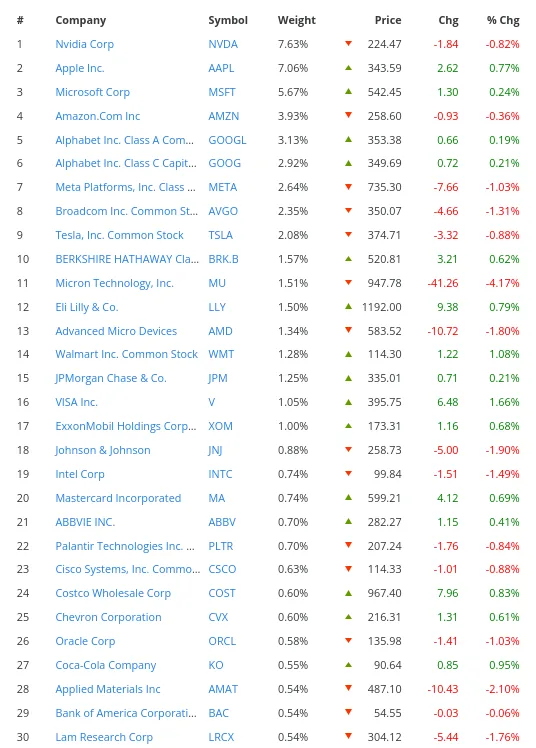
IMF data shows that the group of seven major tech corporations—Alphabet, Amazon, Apple, Meta, Microsoft, Nvidia, and Tesla—now accounts for more than 35% of the S&P 500 index’s value, nearly tripling from a 12% share a decade ago. The combined market capitalization of this group has also surged by more than 50% over the past two years alone.
The IMF warned that should a correction occur, Asian markets would bear the brunt outside the U.S. due to their high degree of financial interconnectedness, while Europe and the UK might have better buffers, though investors holding U.S. assets would still not escape harm.
Debt leverage and circular financing arrangements heighten pressure
The IMF report pointed out that the current boom is relying on an increasing degree of financial leverage. This leverage comes from three sources: the mounting debt of tech companies themselves, borrowed capital from hedge funds pouring into the industry, and retail investors using leverage to buy AI stocks. When the market experiences a downturn, these debts could trigger forced sell-offs, pushing volatility out of control.
Notably, the IMF paid special attention to circular financing arrangements between major infrastructure corporations and smaller AI companies. According to the fund’s estimates, approximately $300 billion in transactions took place between cloud infrastructure providers and weaker AI companies over the past three years, accompanied by $650 billion in debt, in exchange for about $1,400 billion in future financial commitments. This tangled web of linkages causes vulnerability to spread more rapidly if a single link encounters cash flow problems.
Skepticism over economic payoffs from massive spending
Beyond financial structure, the IMF also highlighted evidence suggesting that real-world AI deployment may not require the massive scale of infrastructure investment currently undertaken by major cloud providers. At the same time, the economic benefits delivered to overall productivity may fall short of initial expectations.
As the costs of building data centers continue to consume tens of billions of dollars each quarter, the stock market’s patience will hinge on how quickly commercial applications generate real revenue. If the gap between actual cash flow and capital expenditure persists for too long, the IMF’s warning will cease to be a distant scenario and could instead become a stress test for the entire financial system.