On October 12, 2026, at the Open Compute Project Global Summit in San Jose, NVIDIA announced the contribution of its Vera Rubin rack and compute tray designs via the MGX architecture. The company also open-sourced additional DSX software components and collaborated with data center operators to establish common standards for power, cooling, and networking.
The focus of the announcement is the manufacturability and operability of the entire system, rather than open-sourcing the complete chip design. As AI infrastructure increases in density, placing more accelerators into a single cabinet solves only part of the problem; power, thermals, and data transmission must be designed together.
MGX 1.2 standardizes infrastructure for high-power racks
According to NVIDIA, MGX 1.2 supports rack configurations up to 250 kW, adding rack-scale liquid cooling connections and a cooled 5,000 A busbar. The design also features fanless liquid-cooled compute trays, standardized power and cooling interfaces, and support for 19-inch equipment.
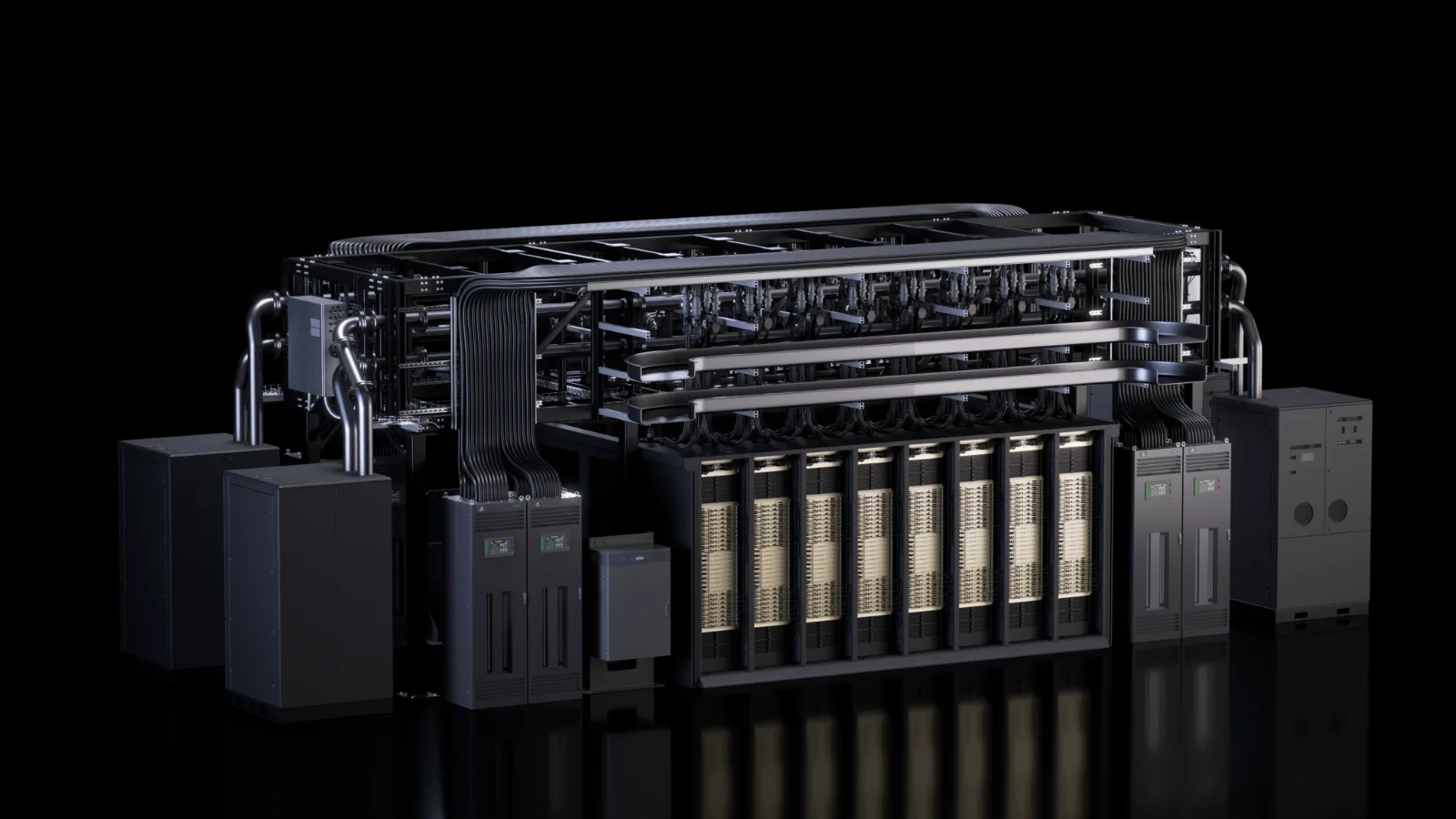
NVIDIA also expanded its design direction to Vera CPU racks, serving tool calling, workflow orchestration, and sandboxed execution for AI agents. This is a distinct workload from the large-scale training and inference handled by the Vera Rubin NVL72, though both share the modular rack foundation.
Operations software is also opened up further
The four new DSX components target network configuration, cluster readiness validation, rack hardware management, and bare-metal server deployment. They correspond to Config Manager, Cluster Readiness Engine, Rack Management Service, and Cluster API-based deployment tooling.
According to the company’s description, validating clusters under real workloads prior to training helps detect hardware issues early. Network configuration and rack management are automated to reduce repetitive manual operations. However, the operational benefits presented in the source represent NVIDIA’s claims, not independent test results conducted in this article.
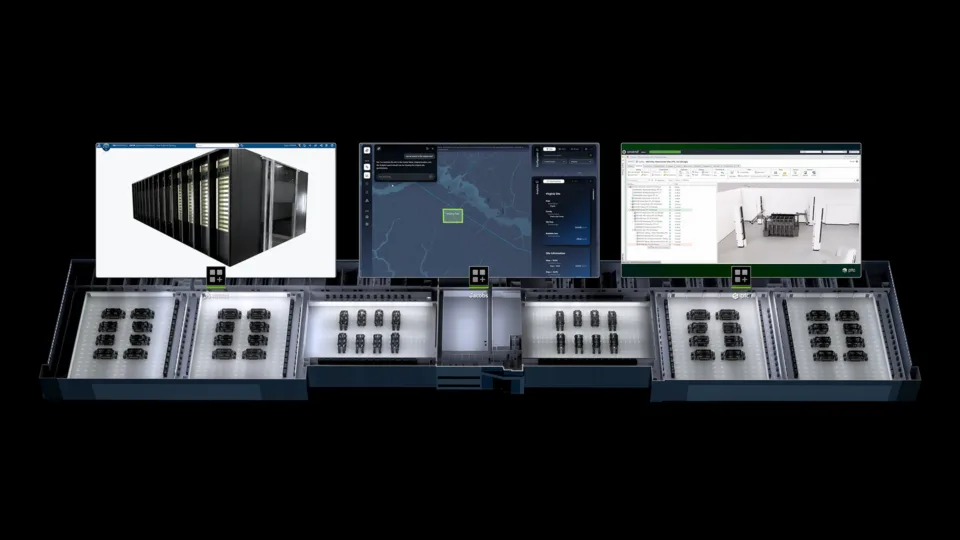
Together with AMD, Google, and Meta, NVIDIA announced the Open Data Center Specification v0.7, covering power architecture, cooling, and facility layouts. A separate specification co-developed by Google, Meta, Microsoft, and NVIDIA outlines how infrastructure responds during power grid fluctuations. These two documents differ in scope from the rack design and should not be conflated into a single standard.
Networking partnership announcements do not mean all features are ready
Meta stated it will use 102.4 Tb/s Spectrum-6 switches and multipath networking architectures to support Vera Rubin infrastructure. NVIDIA described the architecture as capable of supporting scales exceeding 100,000 GPUs; this figure does not prove Meta had already completed such a cluster on the day of the announcement.
Meanwhile, Falcon Transport support was announced for future ConnectX-10 SuperNICs and BlueField DPUs. The USFP optical module standard developed in collaboration with Cisco was also presented as a roadmap plan targeting speeds of 400 Gb/s per lane. A joint announcement date should not be interpreted as the date all products begin shipping.
In essence, NVIDIA is opening parts of its designs so partners can build around its ecosystem. The next question lies in real-world deployment: will common standards help equipment from multiple vendors interoperate better and shorten infrastructure build times, or will projects still require significant bespoke integration effort?