On October 4, on Truth Social, President Donald Trump announced the establishment of the “Super Intelligence Force” (SIF). This interagency task force is directly led by Director of National Intelligence Jay Clayton. This is seen as a concrete step realizing a series of actions over the past two months, this time accompanied by an official name, designated personnel, and a clear implementation timeline.
Through the post, Trump made clear that SIF will coordinate federal government efforts to preserve America’s global leadership in Super Intelligence. He described it as a technology that many consider more monumental than both the Industrial Revolution and the Internet. However, the comparison of being “bigger than the Industrial Revolution” represents Trump’s personal view rather than an assessment from an independent organization.
From promises on X to a named organization
In September, amid safety debates among AI company leaders, Trump announced plans to establish an “AI Force” and appoint an “AI czar,” remarking that “only high IQ people qualify.” At the same time, he dismissed AI safety concerns, labeling them fabrications by the “Radical Left Dumocrats.”
The next step was an executive order directing government agencies to transition to using the term “Super Intelligence” (SI) instead of “AI.” Shortly thereafter, last week, representatives of AI corporations convened at the White House to sign a non-binding safety pledge—an event that saw an unusual misspelling of “United States.” Naming the task force SIF indicates that the administration is combining two objectives: standardizing the new terminology and establishing a corresponding management apparatus.
Nevertheless, the crucial turning point lies in the organizational structure just unveiled. Sources from The Wall Street Journal confirmed that Clayton will serve as Chairman of SIF. The leadership framework also includes three Vice Chairs:
- Andrew Ferguson: Chairman of the Federal Trade Commission
- Scott Kupor: Director of the Office of Personnel Management
- Emil Michael: Under Secretary of War for Research and Engineering
SIF has been given a 120-day deadline to complete a comprehensive report on both the challenges and opportunities presented by AI.
A provision more significant than the roster
Most notable in SIF’s charter is the mandate to both devise solutions addressing SI threats and prevent excessive regulation or regulatory capture that stifles competition and innovation, according to TechCrunch.
This commitment to protecting a competitive market structure is the primary focus, indicating that the administration is not merely stopping at risk assessment. For the broader tech industry, this is clearly a fundamental issue extending far beyond the scope of a standard report.
This direction also aligns with Clayton’s prior commentary in Politico. He emphasized that the U.S. falling behind while China pulls ahead is unacceptable, warning that the greatest risk is losing leadership.
A leader with a contrasting track record
Jay Clayton previously served as Chairman of the U.S. Securities and Exchange Commission (SEC) during Donald Trump’s first term. On his very last day at the SEC, he initiated a lawsuit alleging that Ripple conducted an unregistered securities offering. Later, as U.S. Attorney for the Southern District of New York, he proceeded to prosecute Roman Storm, founder of Tornado Cash.
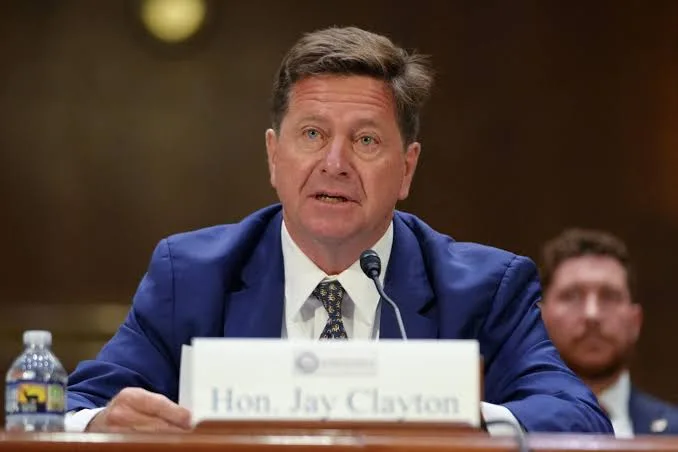
Reacting to the appointment, Roman Storm remarked succinctly: “This is the exact opposite of an open-source AI future.” The comment highlights a pronounced paradox: the official appointed to lead the national AI strategy is the very individual who once imposed some of the strictest enforcement measures on the cryptocurrency market.
For crypto market observers in the U.S., this carries profound implications. After numerous shifts in the relationship between the administration and the crypto sector over the past two years, oversight of AI policy now belongs to an official known for a hawkish regulatory stance. The central question goes beyond Clayton’s past public remarks, centering on whether SIF will possess the authority to influence digital asset policy, given that the underlying orders focus primarily on addressing “SI-enabled threats.”
Ultimately, attention is focused on the 120-day deadline: the forthcoming report will shed light on how the pledge to “avoid regulatory overreach” will be implemented, while determining whether the “Super Intelligence” designation genuinely establishes a new regulatory paradigm or merely represents an administrative reorganization.