
When the prices of phones, laptops, or gaming consoles rise, consumers are usually accustomed to reasons like upgraded cameras, newer processors, or exchange rate fluctuations. However, at present, a less-noticed component is becoming the biggest bottleneck: Memory. The RAM market is entering a period of prolonged scarcity, and this pressure is spreading rapidly from AI data centers to familiar everyday tech devices.
The issue of memory scarcity actually began before the AI boom. The memory manufacturing industry once relied on increasing chip density per wafer to expand output, but these technical improvements have become increasingly slow and expensive. Furthermore, after the surge in device demand during the Covid-19 pandemic, the market weakened, leaving companies with high inventory levels and forcing them to scale back factory expansion plans.
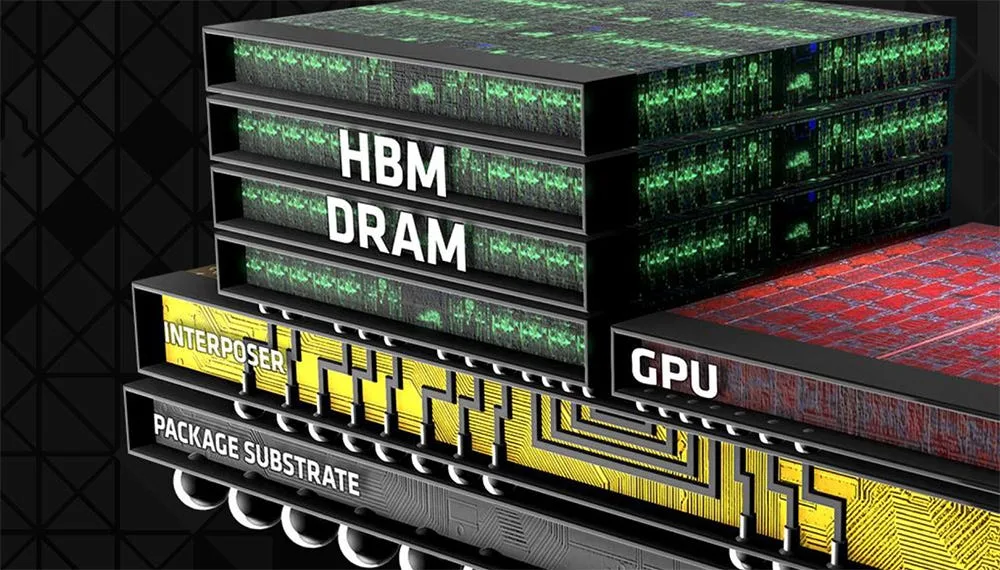
Just as the market began to recover, the generative AI wave exploded with memory consumption far exceeding all forecasts. The hotspot is focused on HBM (High Bandwidth Memory), a type of high-bandwidth memory placed close to AI chips. HBM is not simply “more RAM,” but is manufactured by stacking multiple chips and using complex connections to optimize data transfer speeds. According to Micron’s estimates, producing a certain amount of HBM consumes about three times the wafer capacity compared to conventional DRAM, directly impacting total industry capacity.
From a manufacturer’s perspective, prioritizing HBM is a sound business decision. Tech corporations developing AI possess abundant financial resources, high demand, and are willing to sign long-term contracts—a customer base that offers much higher stability than forecasting consumer phone purchasing power. Although Samsung, SK Hynix, and Micron are not abandoning traditional DRAM, limited production capacity naturally shifts toward where higher profits are generated.
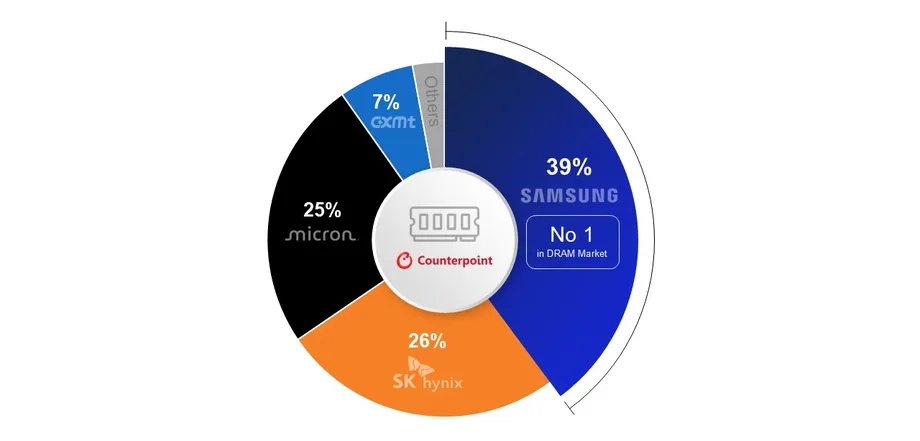
The negative impact of this shift is spreading very quickly due to the highly concentrated nature of the market. According to data from Counterpoint (cited by The Verge), the three giants—Samsung, SK Hynix, and Micron—held up to 90% of the global memory market share in the second quarter of 2026. With supply in the hands of a small group of manufacturers, the ability to rapidly increase output is impossible, even as component prices are trending upward.
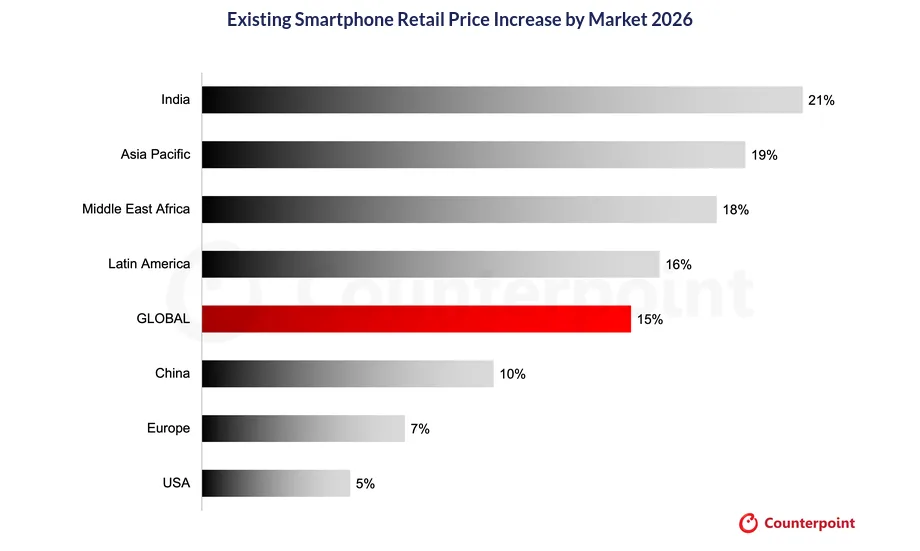
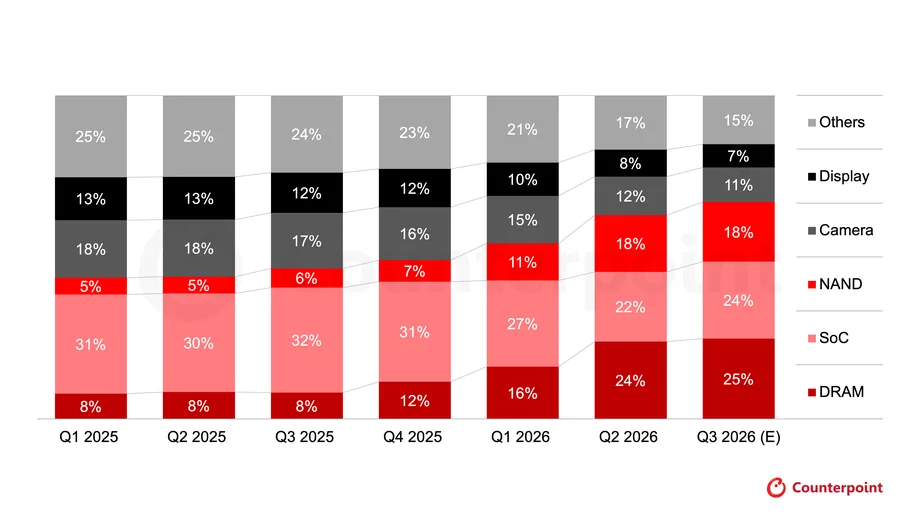
Actual figures prove that the level of tension has extended beyond AI servers. Counterpoint estimates that DRAM prices for smartphones increased by 56% in the first quarter of 2026 and rose by another 83% in the second quarter. The cost for a 16 GB DRAM smartphone jumped from about 42 USD (second quarter of 2025) to as much as 181 USD just one year later. Although major smartphone brands have their own negotiation leverage, the massive volatility in input costs still places enormous pressure on production costs.
AI demand has turned memory into a bottleneck for the entire hardware supply chain. Tech brands now face difficult choices: accept reduced profit margins, cut configurations, or pass the increased costs on to consumers.
In summary, the AI boom is squeezing a market that was already difficult to expand and highly concentrated. When a foundational raw material is in short supply, the consequences do not stop at semiconductor industry financial reports but will appear directly on the price tags of the tech devices we use every day.