An executive order requiring U.S. government agencies to replace the term AI (Artificial Intelligence) with SI (Super Intelligence) has triggered an unforeseen side effect: Slovenia’s country-code top-level domain (.si) has become the most sought-after domain on the web.
Klara Herman, spokesperson for Registry SI, the organization that manages Slovenia’s domain registry, told the BBC that purchases of .si domains surged by 2,199% in September. She was cautious, however, not to attribute the entire spike to President Trump.
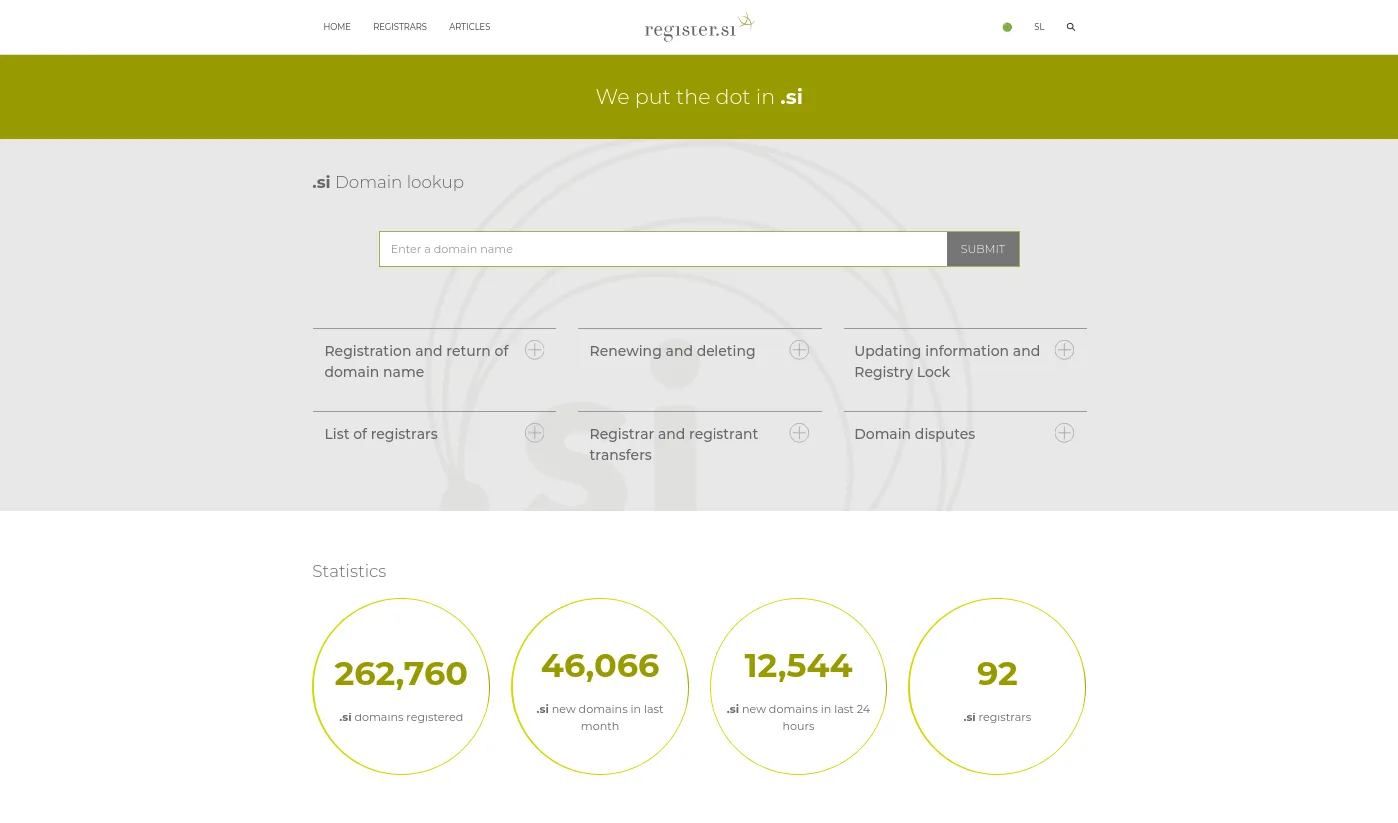
The registry logged 11,000 new addresses on September 30, the day after the executive order was signed, and nearly 13,000 new .si domains in the 24 hours leading up to TechCrunch’s report.
What the executive order requires
To understand why this domain is in such high demand, one must look at what the order actually says. According to Executive Order 14434, titled “Inaugurating The Era Of Super Intelligence,” the administration sets a policy that federal executive agencies, to the extent permitted by law, shall use the terms “Super Intelligence” and “SI” in place of “Artificial Intelligence” and “AI,” and shall not recognize the latter two terms in any context.
Implementation applies to official correspondence, public communications, websites, reports, and policy documents across the executive branch. The order does not require revisions to previously issued documents. The definitions of “Super Intelligence” and “SI” serve solely as executive guidelines, and within 60 days, the President’s science and technology advisor must submit a draft definition at the federal level.
In other words, “SI” is currently an internal executive term within the U.S. government, not a new technical standard. The open question is whether a terminology shift in executive documents is enough to sustain a rush on another country-code domain, especially when most end users do not read U.S. government directives.
Not everyone is buying for AI
Hostinger, a web hosting provider, reported that .si is currently its second most popular extension, behind only .com. Among its customers, nearly 4,300 registered on September 30 and roughly 5,400 on October 1. More than three-quarters of registrations logged from September 23 onward occurred in those final two days, with over half of buyers based in the United States and India.
Yet the most striking detail is how little of it relates to AI. Only about 3% of .si domain names registered through Hostinger were AI-related. The vast majority were categorized as “unclassified,” meaning they did not align with any specific subject.
Wix, another platform, said it saw no “meaningful” increase, noting that registration volume since September 29 has been very small. A Wix spokesperson added that “it is still early, so that could change.” The discrepancy between Hostinger and Wix illustrates how domain registration statistics can vary widely by platform. In terms of cost, Hostinger noted that a .si domain costs around $12 per year, compared to roughly $90 for .ai, which also requires a two-year commitment.
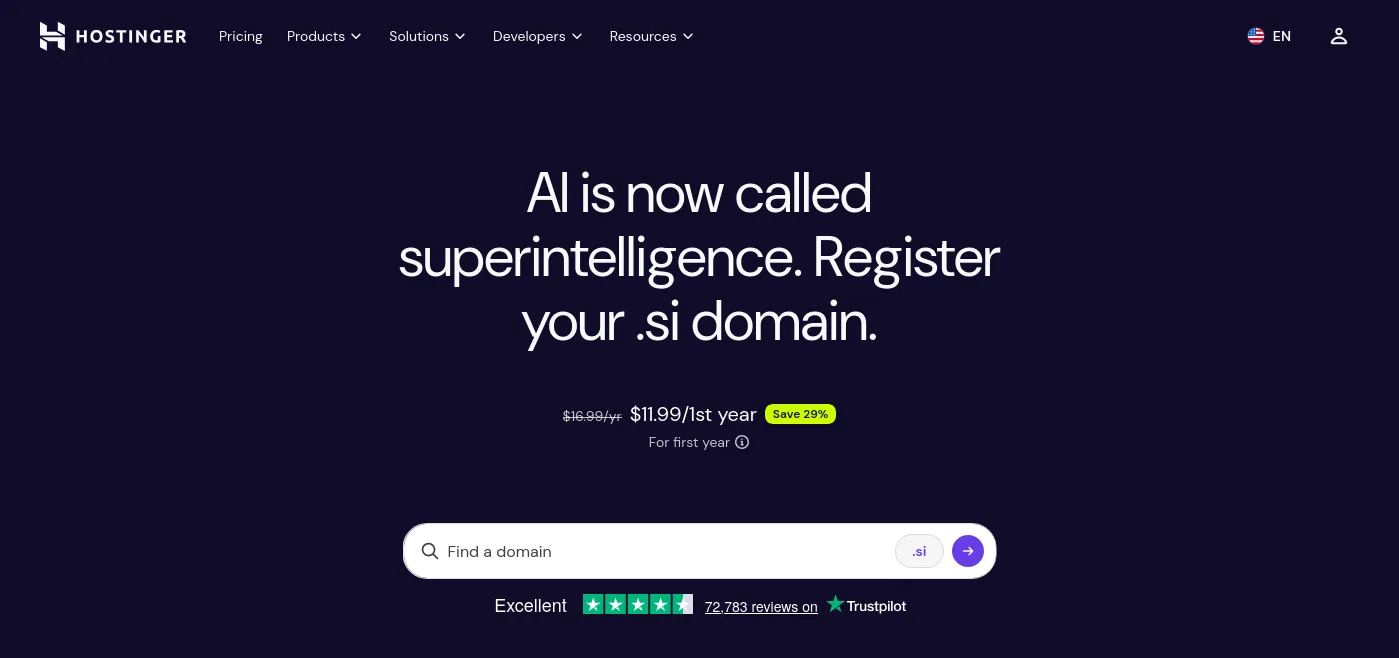
Klaudijus Januitis, head of domains at Hostinger, expects demand for .si to keep climbing, though he does not believe it will replace .ai. He pointed to structural differences: Anguilla levies high fees for .ai with the revenue flowing straight into state coffers, whereas .si is far cheaper and proceeds go to the domain registry. As he put it, for Anguilla, .ai has become a second economy, whereas for Slovenia, .si is merely a bonus.
Buying to flip?
Kim Than, CEO of Genius PR, who works primarily with founders in AI and cryptocurrency, said he bought the .si version of his company’s name to safeguard the brand, simply because it was cheap and he wanted to “lock it down before it gets more expensive.” He described domains as a kind of digital collectible that can be resold or even tokenized on a blockchain. He added that several founder friends are buying because they believe this is the next AI wave, characterizing his own posture with the phrase, “who knows how far it will go.”
It is a candid admission from an active buyer, and it aligns with data showing that only 3% of registrations are AI-related. A domain only proves to be a profitable investment if someone else is willing to buy it at a higher price. The real question is whether Slovenia can turn this sudden traffic surge into sustained long-term demand, or whether it is simply a short-term speculative wave manufacturing its own exit conditions.