
An analysis on Decrypt challenges the conventional narrative surrounding stablecoins: This technology is not “bypassing” the banking system at all, but rather embedding itself deeper into it than anyone predicted.
The Starting Point Is the Data
According to McKinsey and Artemis, stablecoin payment transaction volume reached $35 trillion annually by the end of 2025; however, after stripping out bots, exchange trading, and automated transactions, the real figure stands at only around $390 billion. This represents a mere 0.02% of the $208 trillion cross-border payments market. Claims citing “over $30 trillion in annual volume” primarily reflect bot activity and cyclical trading flows rather than genuine payments.
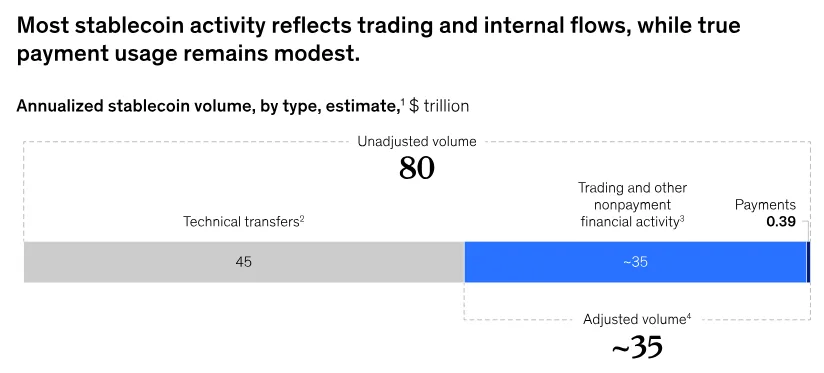
The fundamental nature of corporate cash flows explains why: from payroll and supplier invoice settlements to capital allocations, flows originate in one bank account and terminate in another. Stablecoins essentially serve only as the intermediate processing layer, a role traditionally handled by correspondent banks through complex, costly, and time-consuming SWIFT messaging chains. When both parties adopt stablecoins, this intermediate stage settles on-chain almost instantaneously. Nevertheless, both ends must still pass through the banking system. Consequently, stablecoin enterprises must prioritize building solid foundational infrastructure, integrating fiat gateways, maintaining regulatory compliance, and establishing domestic clearing networks across each target market.
Recent moves by major corporations underscore this trajectory:
- Stripe: Acquired Bridge for $1.1 billion to secure its platform orchestrating core banking relationships.
- Citi: Outlined plans to incorporate Bitcoin custody capabilities into its Custody+ offering.
- Standard Chartered: Commenced pilot testing for stablecoin settlement in Singapore.
Hidden Risks
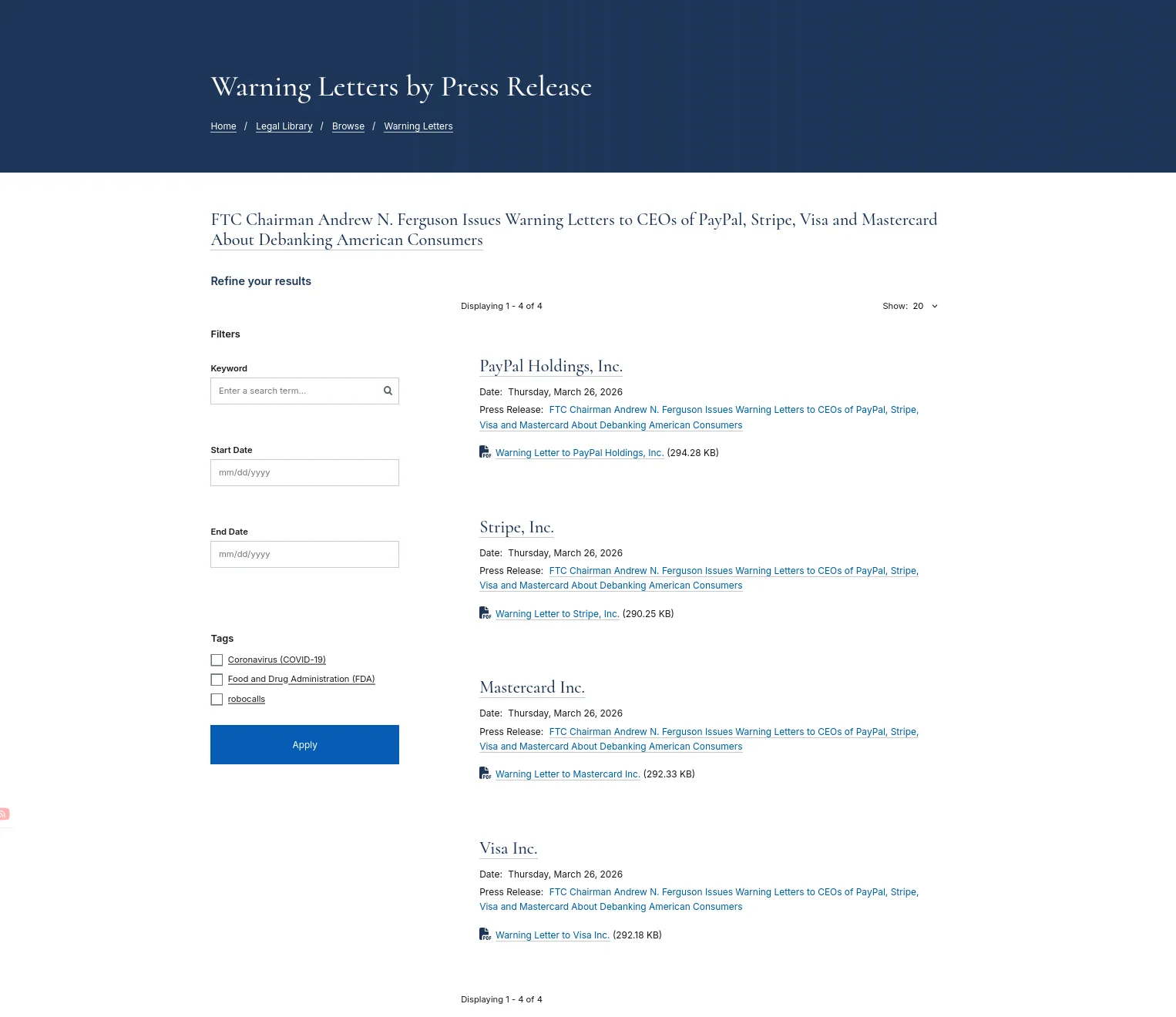
The article also highlights an often-underestimated hazard: reliance on a single banking partner. Recent disruptions like the voluntary liquidation of Silvergate, the FDIC receivership of Signature Bank, and multiple regulatory warning letters illustrate this risk. Notably in March 2026, the US Federal Trade Commission (FTC) issued warning letters to PayPal, Stripe, Visa, and Mastercard addressing debanking concerns—the abrupt termination or denial of banking services.
For businesses dependent on a single financial institution, losing that connection brings operations to an immediate standstill. The definitive remedy requires strengthening infrastructure resilience: building multi-bank connectivity, implementing redundant payment rails, and tailoring regulatory compliance frameworks to each operational jurisdiction.
Decrypt also outlines a tiered benchmark for evaluating corporate transaction volumes, coupled with operational recommendations to minimize debanking risks:
- $50 million/year tier: Maintaining a single banking relationship is generally adequate.
- $500 million/year tier: Surpasses the operational threshold manageable by a single-bank model.
- Approaching $10 billion/year: The decisive factor shifts from raw technological capability to whether the enterprise’s banking partnerships, foreign exchange capabilities, and legal frameworks can support multiple payment corridors.
Regulators Share the Same View
The enactment of the GENIUS Act in July 2025 subjected stablecoin issuers to strict, bank-like standards governing licensing, reserve assets, and public disclosures. As a result, institutional capital has flowed heavily toward banking partners and bank-custodied reserves.

According to an EY-Parthenon survey, 13% of corporations and financial institutions have already integrated stablecoins into their operations, while approximately 80% of the remainder are actively evaluating the technology.
In Summary
When evaluating any “stablecoin volume” metrics, distinguish trading turnover from actual payment flows—two figures separated by several orders of magnitude. And whenever someone promises stablecoins will supplant commercial banks, ask them how many banking relationships they have established for each payment corridor. That is where the true growth bottleneck exists, not at the software layer.